.svg)
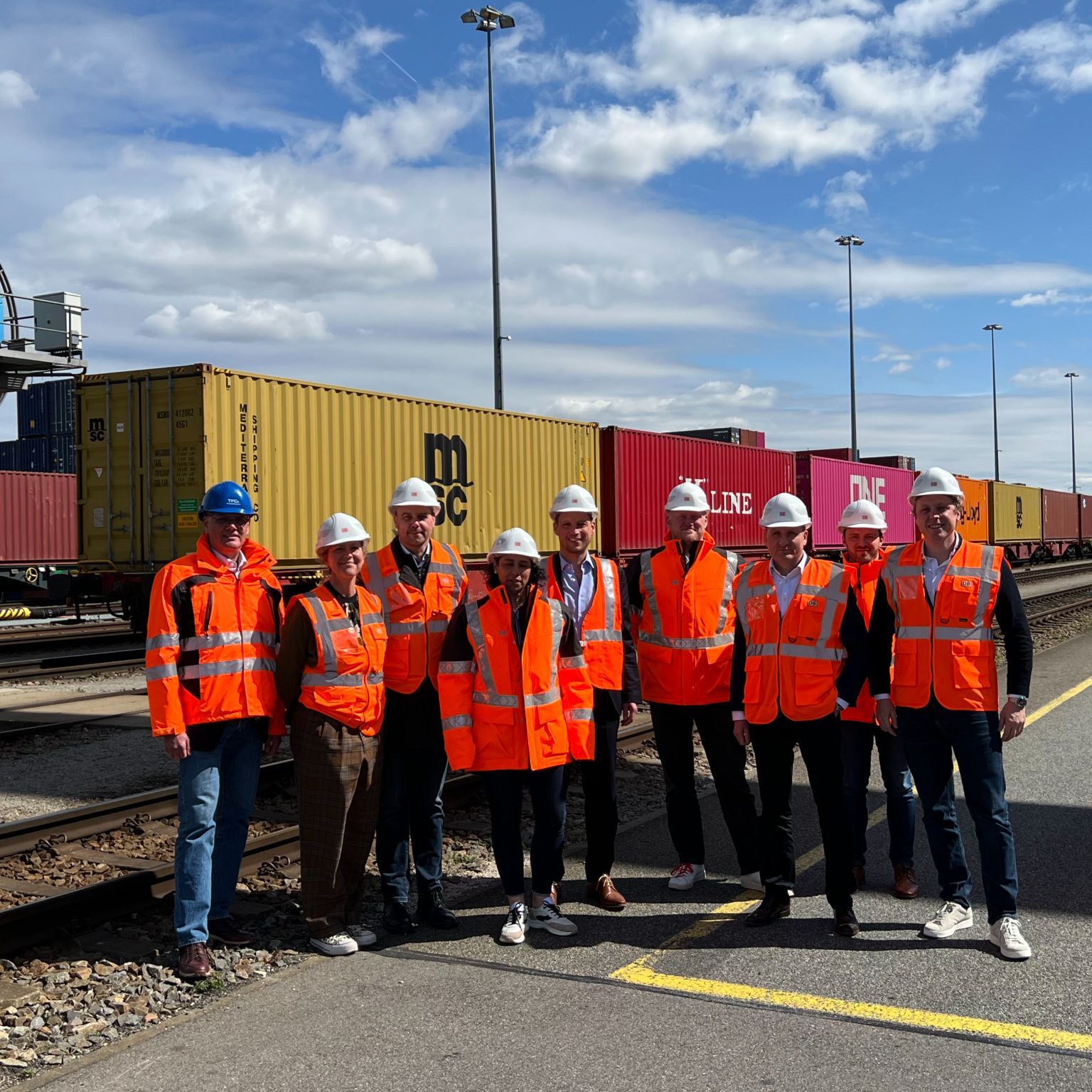
Conroo is playing a central role in a joint project aimed at digitizing customs processes for import containers at intermodal terminals. The pilot project has been successfully implemented at the Regensburg terminal and is now set to be rolled out to additional locations.
The initiative demonstrates that complex digitalization projects in rail freight transport do not always need to start on a large scale. Instead, the project partners deliberately chose a terminal with a manageable number of stakeholders to enable fast implementation and measurable results.
Until now, customs clearance for import containers often relied on paper documents accompanying the container along the entire transport chain — from the seaport, by rail to the hinterland terminal, and onward by truck to the recipient. Missing documents, manual checks and media disruptions frequently caused delays.
The project’s objective was to eliminate paper documents once the customs process is initiated and replace them with a fully digital workflow. Under the coordination of the Logistics Competence Center (LKZ) Prien, the project brings together terminal operator DUSS, rail operator TFG Transfracht, freight forwarder Schmid Transport und Spedition, and Conroo as the specialist for digital truck handling processes.
With the Conroo app, truck drivers can already register digitally at DUSS terminals and other connected locations. This eliminates the need for drivers to stop at counters, leave their vehicles and manually present documents — a process that often led to congestion and waiting times at terminal gates.
Within the customs project, the Conroo app was extended to support digital transmission of customs-relevant data. In addition to container numbers, drivers can now transmit the Master Reference Number (MRN) directly via the app. This allows terminals to verify customs data electronically and assign parking spaces automatically before the truck enters the terminal.
The MRN, a unique 18-digit reference number used across Europe, plays a central role in customs clearance. By integrating the MRN into digital terminal workflows, all parties involved — from rail operators to terminals and truck drivers — gain real-time visibility into the customs status of containers.
One key success factor of the project was the close cooperation with customs authorities. Both national and local customs offices demonstrated openness to digital solutions, recognizing that paper-based processes frequently cause issues in practice — particularly when drivers are missing documents or face language barriers.
The Conroo app supports up to 24 languages, allowing drivers to access customs information in their native language, complete missing data digitally and present the required information during inspections or handovers.
Digital customs processing significantly accelerates terminal operations. Drivers receive parking space assignments via the app and can pass through terminal gates without stopping, while license plates and vehicle data are captured automatically by camera systems.
At the Regensburg terminal, where 100 to 150 trucks arrive daily, digital processing has reduced handling times by up to 20 minutes per truck. For terminal operators and freight forwarders alike, this translates into lower personnel requirements, fewer errors and improved planning reliability.
Following the successful pilot in Regensburg, the project partners plan to extend digital customs processing to additional terminals. Import customs processes are scheduled to go live at the Munich-Riem terminal, followed by export shipments. In the next phase, the solution will be rolled out to further inland terminals and seaports where the Conroo app is already in use.
Currently, Conroo’s solution is deployed at around 30 terminals, with further locations planned. The long-term goal is to establish a scalable, open system for digital customs processing across Europe, benefiting terminals, transport operators and shippers alike.
Source:
https://www.dvz.de/unternehmen/kombinierter-verkehr/detail/news/im-kleinen-anfangen.html
Check out our blogs

.svg)

